
Restore Your Pipes Without Tearing Up Your Property
At H&I Trenchless, we specialize exclusively in trenchless pipe lining, a modern solution that restores damaged pipes from the inside out without the demolition associated with traditional repiping.
What Is Pipe Lining?
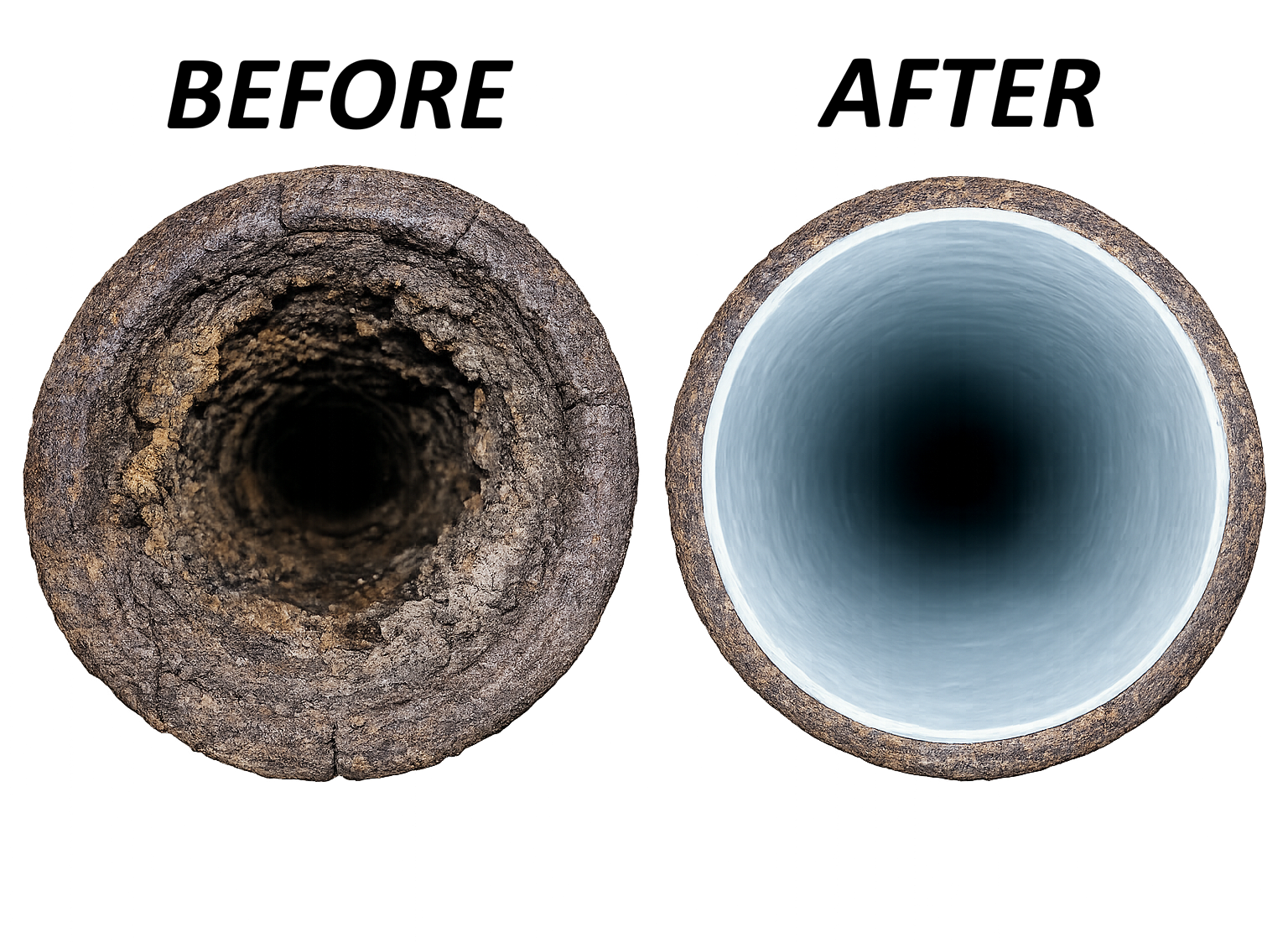
Pipe lining, also known as Cured-In-Place Pipe (CIPP) lining, is a trenchless rehabilitation method that creates a new pipe within your existing pipe.
Instead of digging through floors, walls, driveways, or landscaping, we insert a resin-saturated liner into the damaged pipe. Once cured, it forms a seamless, jointless pipe designed to restore structural integrity and improve flow.
The result is a durable, long-lasting pipe with minimal disruption to your property.
BENEFITS OF Pipe Lining
✔ No major demolition
✔ Faster project completion
✔ Preserve floors, landscaping, and driveways
✔ Cost-effective alternative to traditional repiping
✔ Smooth interior improves water flow
✔ Long-lasting solution
✔ Ideal for residential and commercial properties
Why Choose H&I Trenchless?
Unlike general plumbing companies, pipe restoration is all we do.
Our founder spent over a decade working in the trenchless industry and saw homeowners being offered costly, invasive pipe replacements when modern trenchless technology could provide a better solution.
That experience led to the creation of H&I Trenchless.
Today, we focus exclusively on pipe rehabilitation, allowing us to deliver specialized expertise, advanced equipment, and proven installation methods on every project.
When you choose H&I Trenchless, you're choosing specialists—not general plumbers.
Our Pipe Lining Process
1. Camera Inspection
Every project begins with a high-definition sewer camera inspection to evaluate the condition of your piping system.
2. Pipe Cleaning
We remove scale, corrosion, roots, and debris using specialized cleaning equipment to prepare the pipe.
3. CIPP Installation
A resin-impregnated liner is inserted into the existing pipe and positioned throughout the damaged section.
4. Curing Process
The liner cures inside the pipe, creating a seamless structural pipe within the original pipe.
5. Final Camera Inspection
We perform a final video inspection to verify the quality of the installation and ensure optimal performance.
Signs You May Need Pipe Lining
You may be a candidate for trenchless pipe lining if you experience:
Frequent sewer backups
Slow drains throughout the home
Sewer odors
Aging cast iron plumbing
Cracked or deteriorating drain lines
Water damage caused by leaking pipes
Recurring plumbing repairs